
Can ceramic/SiO₂ coatings be applied to aircraft paint and brightwork—pros/cons?
Yes, ceramic and SiO₂ (silicon dioxide) coatings can be applied to aircraft paint and brightwork, offering superior protection lasting 2-5 years compared to traditional wax's 2-3 months. Pros include exceptional hydrophobic properties that make washing easier, UV protection that prevents oxidation, chemical resistance against exhaust and environmental contaminants, and enhanced gloss that maintains showroom appearance. Cons include higher upfront cost ($1,500-5,000+ depending on aircraft size), required paint correction before application, 24-48 hour cure time, and the need for proper prep—coating over contaminated surfaces locks in defects. When professionally applied after thorough preparation, ceramic coating is the best long-term paint protection available.
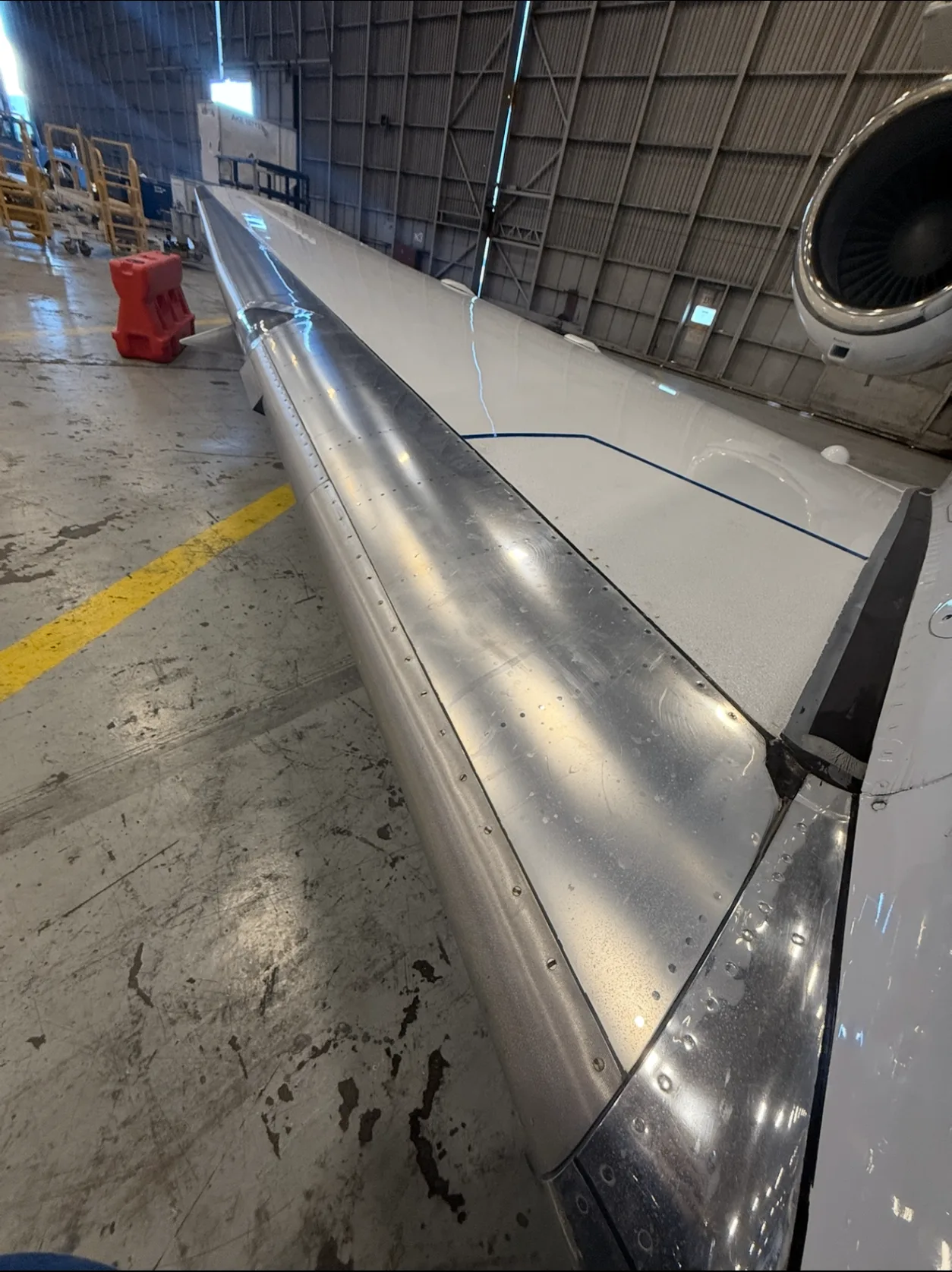
Before
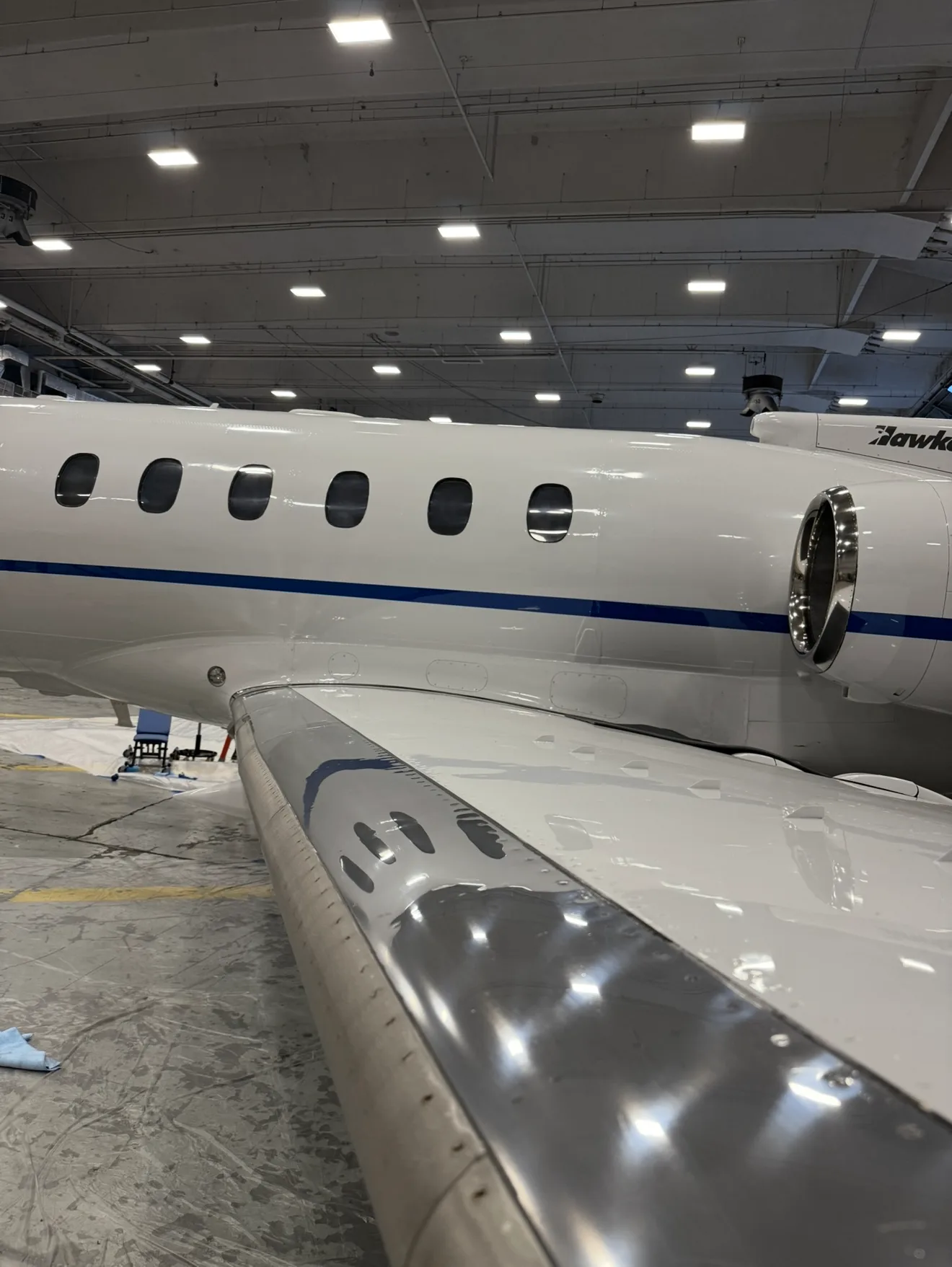
After
What It Is
Ceramic coatings are liquid polymer solutions containing silicon dioxide (SiO₂) or titanium dioxide (TiO₂) that chemically bond with your aircraft's paint, creating a semi-permanent protective layer. Unlike wax that sits on top of paint and washes away, ceramic coating becomes part of the surface at a molecular level. The coating creates an extremely hard, slick surface rated 9H on pencil hardness scale. This surface resists scratching, repels water dramatically (contact angles over 100°), blocks UV radiation, and prevents contaminants from bonding. Professional aviation ceramic coatings are specifically formulated for aerospace conditions.
Why It Matters
Aircraft paint is expensive—$50,000 to $500,000+ depending on aircraft type. Ceramic coating protects this investment far better than any alternative. The hydrophobic effect means rain sheets off, bugs release easier during washing, and exhaust staining doesn't bond permanently. UV blocking prevents the oxidation and chalking that eventually requires expensive paint restoration or repainting. The slick surface actually improves aerodynamic efficiency slightly and makes contamination removal faster—reducing labor costs for regular cleaning. For aircraft owners focused on long-term value preservation, ceramic coating delivers clear ROI.
Owner Checklist
- ✓Verify paint condition—ceramic coating locks in existing defects
- ✓Schedule paint correction before coating if needed
- ✓Choose reputable aviation ceramic coating product
- ✓Ensure 24-48 hour climate-controlled cure time is available
- ✓Plan for 12-24 hour coating application window
- ✓Arrange hangar storage during cure period
- ✓Understand maintenance requirements for coated aircraft
- ✓Document coating application for resale value
Time & Cost
Typical Time
1-3 days including prep, application, and cure
Cost Range
$1,500-3,000 (piston) | $2,500-5,000 (turboprop) | $4,000-10,000+ (jet)
Pricing includes paint decontamination, correction if needed, coating application, and cure time. Larger aircraft with extensive surface area require more product and labor. Paint correction for oxidized aircraft adds $500-2,000. Brightwork ceramic coating adds $300-800. Quality coatings include multi-year warranty.
Risks To Avoid
- ⚠Never apply ceramic coating over contaminated or uncorrected paint—defects become permanent
- ⚠Don't use automotive-grade coatings—aviation coatings handle extreme conditions
- ⚠Avoid application in uncontrolled environments—dust and humidity compromise results
- ⚠Don't fly or expose to water during cure period—coating fails prematurely
- ⚠Skip the cheap coatings—inferior products provide inferior protection
- ⚠Never ceramic coat worn paint—address underlying issues first
Airports We Serve
CleanJets connects you with professional detailing specialists at airports in Missouri, Florida, New England:
St. Louis Lambert
SUSSpirit of St. Louis
MCIKansas City Intl
MKCKC Downtown
SGFSpringfield-Branson
COUColumbia Regional
JEFJefferson City Memorial
BKGBranson Airport
CGICape Girardeau Regional
SUAWitham Field
FPRTreasure Coast Intl
VRBVero Beach Regional
DJTPalm Beach (President Donald J. Trump Intl, formerly PBI)
LNAPalm Beach County Park
BCTBoca Raton
FLLFort Lauderdale-Hollywood Intl
FXEFort Lauderdale Executive
PMPPompano Beach Airpark
OPFMiami-Opa Locka Executive
TMBMiami Executive
MIAMiami Intl
EYWKey West Intl
MTHFlorida Keys Marathon Intl
APFNaples
RSWSouthwest Florida Intl
FMYPage Field
PGDPunta Gorda
VNCVenice Municipal
SRQSarasota Bradenton Intl
MLBMelbourne Orlando Intl
TIXSpace Coast Regional
DABDaytona Beach Intl
ORLOrlando Executive
MCOOrlando Intl
SFBOrlando Sanford Intl
ISMKissimmee Gateway
HVNTweed New Haven
BEDHanscom Field
BOSBoston Logan Intl
MVYMartha's Vineyard
OWDNorwood Memorial
BVYBeverly Regional
PVDRhode Island T. F. Green Intl
BDLBradley Intl
PWMPortland Intl Jetport
MHTManchester-Boston Regional
Related Services
Looking for professional help? CleanJets connects you with experienced specialists for these services:
Ready for Professional Aircraft Detailing?
Connect with experienced specialists who understand your aircraft's specific needs.
Frequently Asked Questions
How long does ceramic coating last on aircraft?
Quality professional ceramic coatings last 2-5 years depending on product tier, application quality, and maintenance. Aviation-specific coatings handle UV exposure, temperature extremes, and environmental contamination better than consumer products. Annual maintenance treatments can extend life significantly.
Can ceramic coating be applied to brightwork?
Yes, and it's highly recommended. Ceramic-coated brightwork stays polished longer, resists oxidation, and releases water spots more easily. The coating must be applied after polishing to mirror finish. Some detailers use metal-specific ceramic products for optimal bonding and protection.
Do I still need to wash my aircraft after ceramic coating?
Yes, but washing becomes much easier and less frequent. Contamination doesn't bond as strongly, so light rinses often suffice. You'll use less chemicals and spend less time scrubbing. However, allowing contamination to sit indefinitely will eventually overcome any coating's protection.
Is ceramic coating worth the cost?
For most aircraft owners, yes. Calculate your annual washing and waxing costs, add the value of preserved paint condition, factor in time savings, and compare to ceramic coating cost amortized over 3-5 years. Most owners find ceramic coating provides positive ROI while delivering superior protection and appearance.